
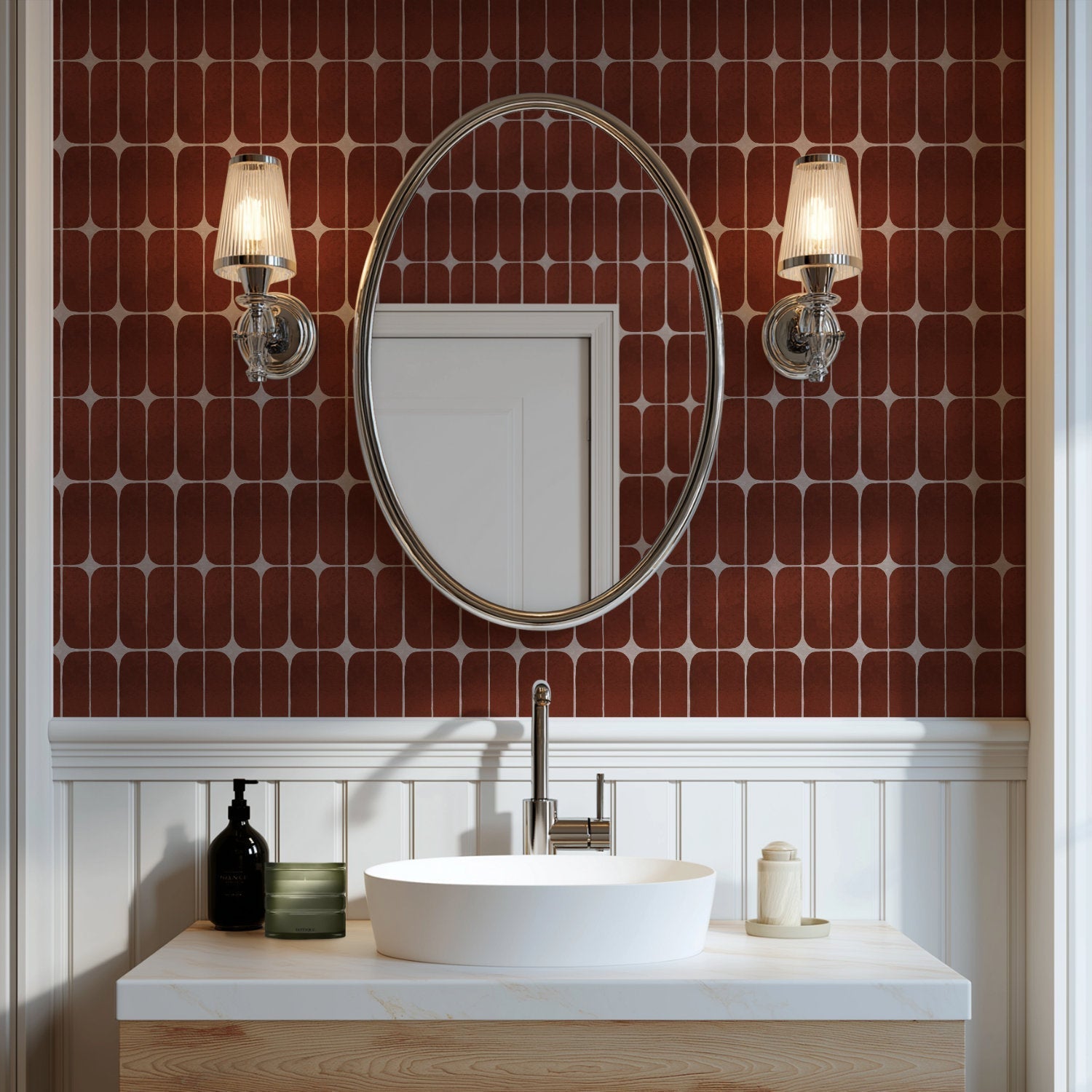
Traditional Wallpaper vs Peel & Stick: An Honest Guide from the Designer
You've found the design. You know which room. Now you're stuck on the question everyone ends up Googling at some point: do I go traditional or peel & stick?
It's a reasonable question, and the answer isn't one-size-fits-all. Both are genuinely good options. Both have real eco credentials. Both can look beautiful on a wall. But they're not the same thing, and the right choice depends on your room, your situation, and how you're planning to hang it.
I sell both, so I have no horse in this race. Here's the honest version.

What's the difference between traditional and peel & stick wallpaper?
Traditional wallpaper is a nonwoven paper that goes up with paste. You apply the paste directly to the wall, hang the paper dry, and smooth it into place. It doesn't expand or contract during hanging, which makes alignment more straightforward than older paper-backed types. When it eventually comes down, it requires soaking and scraping -- more on that below.
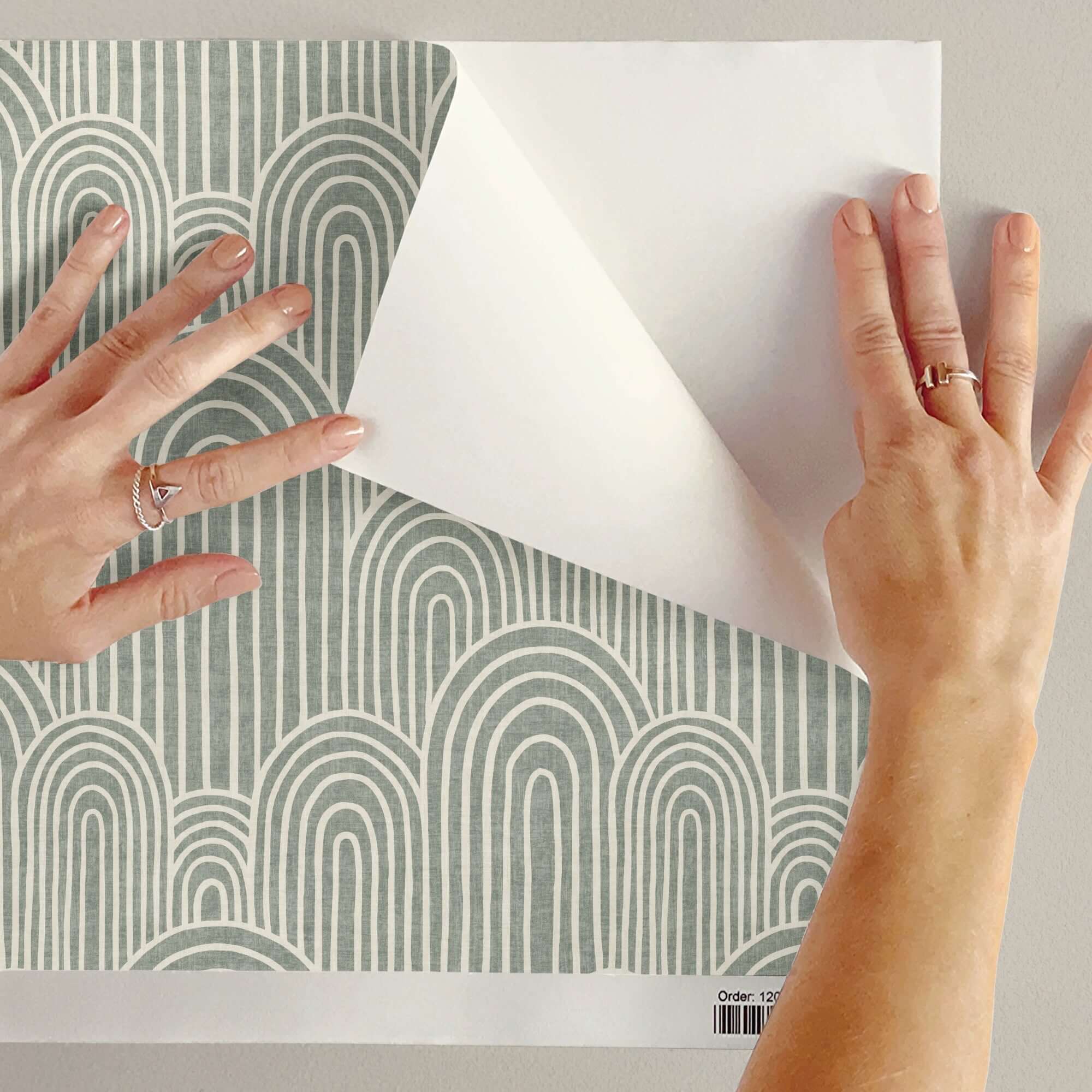
Peel & stick wallpaper has an adhesive already applied to the back. You peel off the backing and press it to the wall. No paste, no mess, no waiting for anything to dry. It's repositionable for the first 24 hours, so you have plenty of time to adjust and align each panel before the adhesive fully sets. When you're ready for a change, it peels away cleanly.
The key difference isn't just how they go up. It's what they're made of, how long they last, and how much control you have over the process.

Peel and Stick Wallpaper vs Traditional Wallpaper: A Comparison
The biggest decision is whether peel and stick wallpaper is the right call at all, or whether traditional is the better fit for your situation.
|
Factor |
Peel & Stick |
Traditional |
|
Installation time |
1-2 hours per accent wall |
Several hours to a full day |
|
Skill required |
Beginner friendly |
Moderate to experienced |
|
Mess |
None |
Paste, water, drop cloths |
|
Removal |
Very straightforward |
Requires soaking and scraping |
|
Durability |
Good for lower-traffic areas |
Better for high-traffic areas |
|
Wall condition required |
Smooth surface essential |
Can hide minor imperfections |
If you're decorating a bedroom, a home office, or a rental, peel and stick is often the more practical choice. For a hallway or a room with children and pets, traditional wallpaper tends to hold up better over time.
The eco question
This comes up more than you'd think, and the picture is a little more nuanced than most people expect.
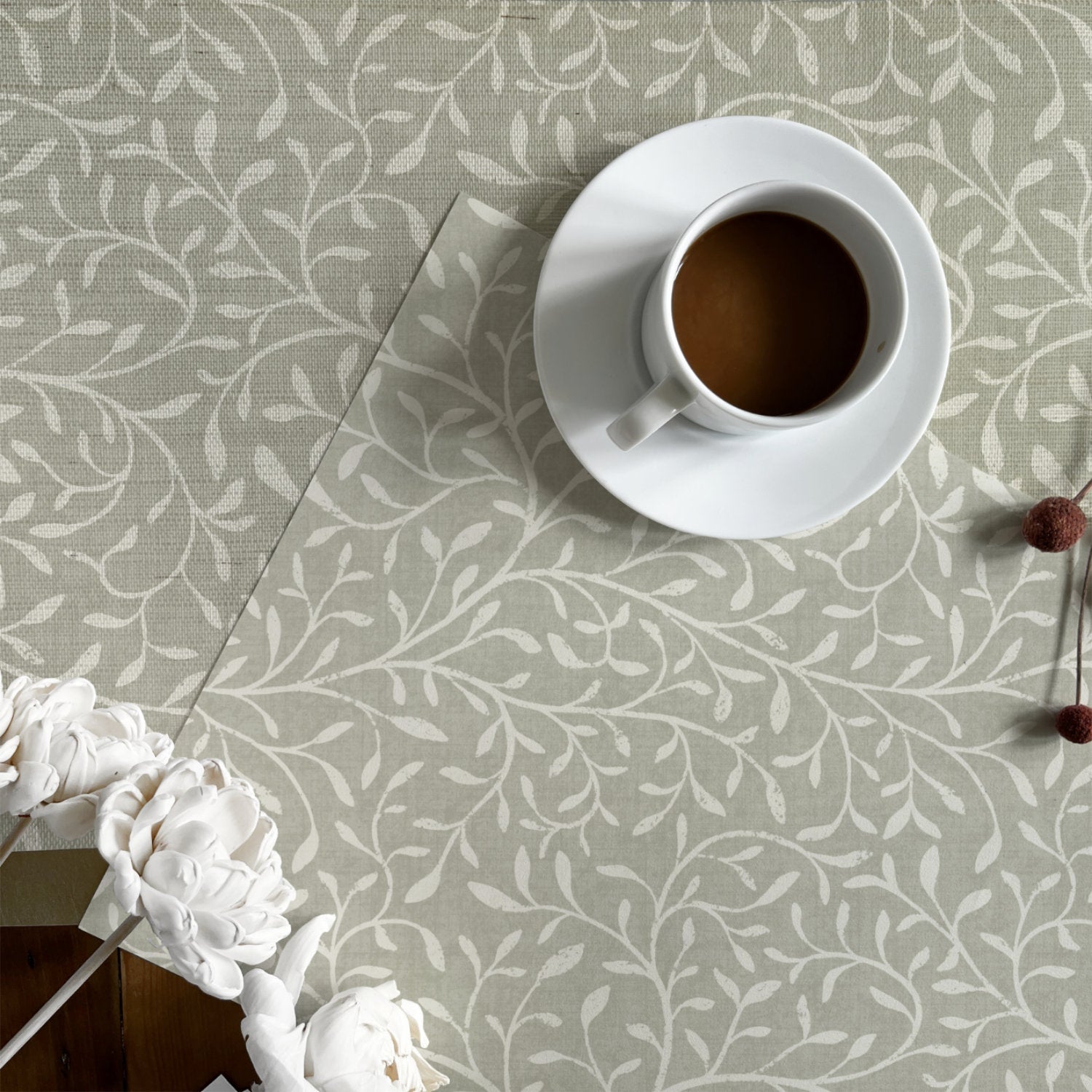
Traditional nonwoven wallpaper is PVC-free. It contains no vinyl, no harmful coatings, and no toxic adhesives, which is better for indoor air quality than the old vinyl wallpapers that earned wallpaper its bad reputation in the nineties.
My traditional wallpaper is printed on nonwoven paper using water-based inks, and produced to order so nothing sits in a warehouse waiting to be thrown away.
My peel & stick wallpaper is also PVC-free. It's a fabric-based substrate, not vinyl, printed with GreenGuard Gold certified inks. GreenGuard Gold is an internationally recognised standard for low chemical emissions, independently tested and widely used across both the US and Europe. Worth knowing if you're decorating a nursery or a room with limited ventilation.
Peel & stick also has its own practical eco case. Because it goes up cleanly and comes away without damage, there's less waste during both installation and removal.
Neither is the wrong answer environmentally. But if longevity is part of your eco thinking, traditional wallpaper that lasts 10 to 15 years is a more considered long-term choice than something you'll replace in 5 to 10.

What decorators and tradespeople actually choose
Peel & stick has become genuinely popular with first-time DIYers, and for good reason. It's forgiving, it's fast, and you don't need any specialist equipment. If you've never hung wallpaper before and you want to give it a go, it's a perfectly sensible place to start.
But ask most professional decorators which they'd rather work with, and the answer is almost always traditional.
I'll give you a concrete example. Someone I know has spent years as a maintenance manager for a large housing association, inspecting and overseeing work on hundreds of properties. He'll take traditional wallpaper any day. Not because he's old-fashioned, but because he knows how it behaves, how it sits, and how it holds up over time.
With traditional wallpaper, you apply paste to the wall and then hang the paper into it. That gives you a workable window to ease panels into position, close up seams, and smooth out any issues before the paste sets. With peel & stick, the 24-hour repositionable window is genuinely useful for alignment, but once that adhesive has fully cured you're committed. Any creases or misalignments after that point mean peeling back and starting again.
For a confident DIYer doing a single accent wall, that's fine. For someone tackling a full room, a tricky staircase, or a large-scale pattern match, the paste window that traditional gives you is worth a lot.

Can you use traditional or peel & stick wallpaper in a bathroom?
Wallpaper in bathrooms and kitchens is having a proper moment, and it's well deserved. A well-chosen pattern in a bathroom can do more for a room than any amount of paint.
But humid rooms raise a specific question: which type holds up better?
The answer is more nuanced than most guides suggest.
With traditional wallpaper, you choose your paste. That means you can use an adhesive specifically formulated for nonwoven wallpaper in bathroom conditions, such as Methylan Direct (widely available in the UK and Europe) or Roman PRO-880 Ultra Clear (available in the US). The right paste makes a meaningful difference in a humid environment.
That said, traditional nonwoven wallpaper in a bathroom does come with conditions. It shouldn't be in direct or consistent contact with water, so directly inside a shower enclosure or right next to a bath isn't ideal. And it needs reasonable ventilation to perform well long-term. Used sensibly, away from the splash zone and in a properly ventilated room, it can work well.
Peel & stick is worth considering for bathrooms too. My peel & stick wallpaper is a fabric substrate rather than paper, which handles moisture differently and is easier to wipe down. For a bathroom where humidity is a real factor, it may actually be the more practical choice.
If you're not sure which suits your specific bathroom, just get in touch. It's worth a quick conversation before you order.

What about removing it?
Worth addressing, because it comes up.
Peel & stick is straightforward to remove. Lift a corner and peel slowly. It comes away cleanly without damaging the wall underneath, which is a big part of why it's popular with renters.
Traditional wallpaper is a different job. Modern nonwoven wallpaper is significantly easier to remove than the vinyl and paper types that went up in previous decades, but it still requires effort. You'll need to soak the wall to soften the paste, then work with a scraper in sections. A wallpaper steamer makes the job considerably faster if you're covering a whole room. It's doable as a DIY project, but set aside a proper amount of time and don't expect it to peel away in one satisfying sheet.
The upside is that if you've chosen well and hung it properly, you won't be removing it for a good while.

Traditional wallpaper vs peel & stick: which should you choose?
Here's a straightforward way to think about it.
Peel & stick is probably your best option if:
- You're renting and need something fully removable
- You're tackling wallpaper for the first time and want a gentler learning curve
- You're doing an accent wall or a lower-commitment space
- You want the flexibility to change it in a few years without a big job
- You're wallpapering a bathroom with significant humidity
Traditional wallpaper is probably your best option if:
- You own your home and want a finish that lasts
- You're hiring a decorator, most will prefer it
- You're covering a full room rather than a single wall
- You want the most control over the final result, including paste choice for specific rooms
- Longevity and eco credentials matter to you
If you'd like a second opinion before you decide, the team at Real Homes weigh up removable versus traditional wallpaper from a hands-on DIY angle, and land in much the same place I do: it comes down to your project, your walls, and how long you want it up.
If you're genuinely unsure, order a sample of both. Holding them side by side tells you more than any guide can.

An invitation
Both types are available across all my designs, so whichever direction you land on, you won't need to compromise on the pattern.
If you've got a specific room in mind and you're not sure which is the better fit, just get in touch. I'm happy to talk it through. And if you'd like more help with the whole buying process, my free guide Buy Wallpaper with Confidence covers everything from measuring your walls to ordering the right amount.
Feeling confident? Browse my collections.
After some more wallpaper tips? Download my free guide.

Written by Sara Cooper

Leave a comment
This site is protected by hCaptcha and the hCaptcha Privacy Policy and Terms of Service apply.