
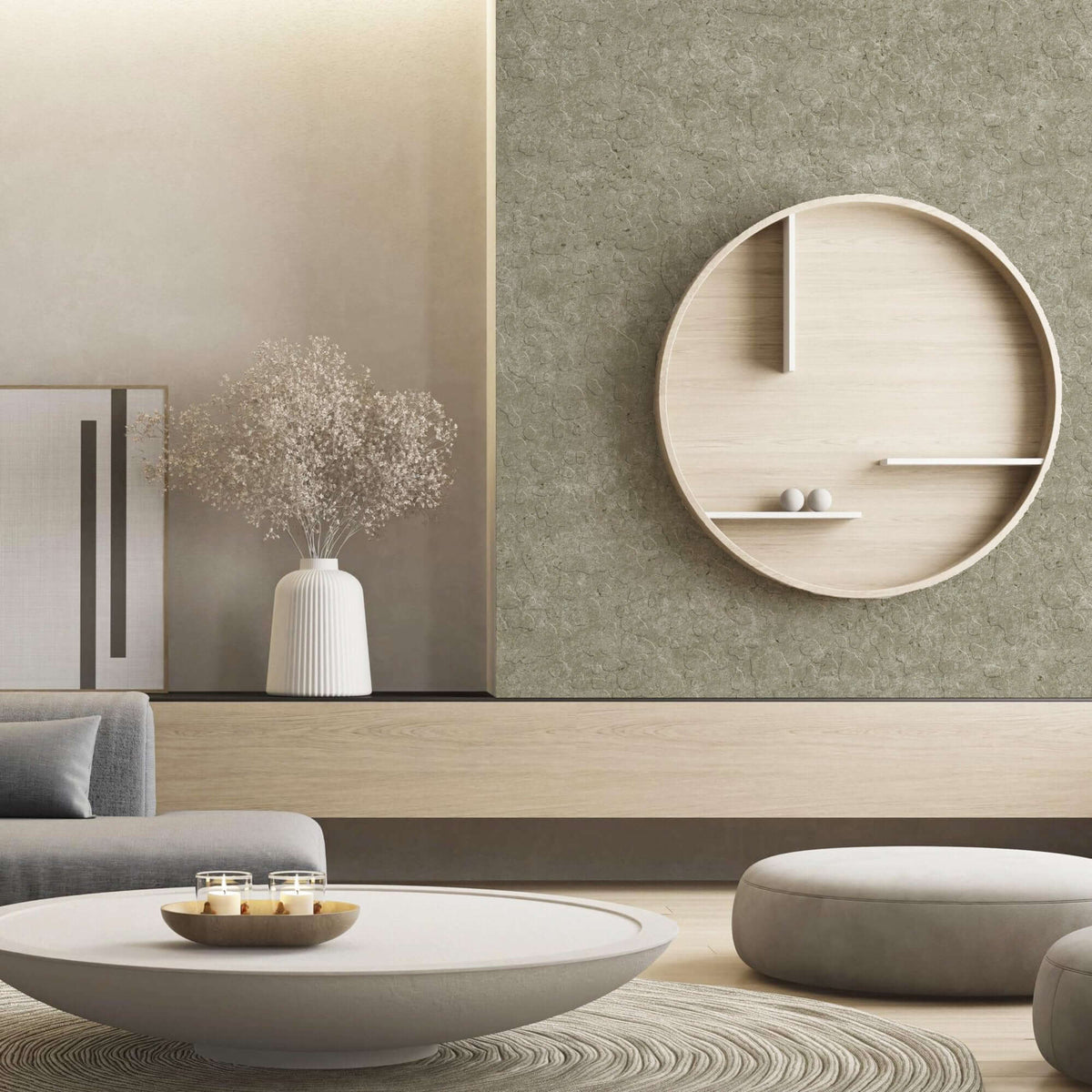
Japandi Wallpaper Ideas for Modern & Calm, Minimal Interiors
Japandi interiors are often described as calm, minimal, and pared back. And they are, but that doesn't mean they have to be plain.
At its heart, Japandi is about intention. Choosing fewer things, but choosing them well. Letting materials breathe. Allowing a space to feel grounded rather than styled to impress.
Wallpaper can absolutely belong in a Japandi home, it just needs to play a quieter role.
If you've ever loved the look of Japandi interiors but worried that wallpaper might feel "too much", this guide is for you. I'll walk you through some japandi wallpaper ideas that work beautifully within calm, considered spaces, which styles feel most at home, and how to use wallpaper room by room without losing that sense of calm.
If you're eager to browse you can view my Japandi wallpaper collection here.

Creating Calm, Characterful Spaces with Pattern
Modern Japandi wallpaper ideas tend to sit somewhere between texture and tone. Rather than bold statements or high-contrast designs, the most successful Japandi interior wallpaper adds depth quietly, supporting the mood of the space instead of dominating it.
In Japandi interiors, pattern works best when it feels intentional and restrained. Wallpaper should add atmosphere, not noise. When chosen thoughtfully, it becomes part of the architecture of the room, something you feel rather than immediately notice.

What Makes an Interior Feel Japandi?
Japandi sits somewhere between Japanese minimalism and Scandinavian warmth. It borrows the restraint, balance, and respect for space from Japanese design, and pairs it with the softness and comfort of Nordic interiors.
In practice, that usually means natural materials like wood, linen, paper, and stone, a calm neutral palette with earthy undertones, furniture that sits low and feels considered rather than bulky, and a sense that everything in the room has earned its place.
Japandi isn't about stripping a room bare. It's about removing the noise so the details that remain can actually be felt.
Wallpaper fits into Japandi interiors when it adds depth, texture, or quiet movement, not when it demands attention.

Colour in Japandi Interiors: Earthy, Grounded, and Never Loud
Japandi colour palettes tend to sit close to nature, but that doesn't mean they're flat or boring.
The colours that work best in Japandi interiors are the ones you might notice on a long walk rather than in a paint chart, softened by light, texture, and time.
Think warm sand and clay rather than stark white, soft sage, olive, and eucalyptus instead of bright green, stone, mushroom, and putty tones over cool grey, and inky charcoal or deep brown used sparingly for contrast.
These colours don't fight for attention. They settle into a space.
Wallpaper is often the easiest way to introduce these earthy Japandi colours gently, especially if you're hesitant about committing to colour across an entire room. A pattern that blends tonal, nature-led hues together can feel calmer than a single flat colour, particularly in natural light. The beige wallpaper collection is a gentle place to start: sand, clay and stone, warm without the starkness of white.
If you're unsure where to start, working from a small, grounded Japandi colour palette helps everything else fall into place.
The key is restraint. Japandi colour works best when tones sit close together rather than high contrast, darker colours are used as anchors rather than statements, and colour feels softened by texture or pattern.
A muted botanical in sage and stone, or a subtle geometric in clay and linen, will usually feel more at home in a Japandi space than anything too crisp or saturated. If it's the softer greens pulling you in, the green wallpaper collection runs from sage and eucalyptus through to deeper olive.

Can Wallpaper Work in Japandi Interiors?
The best japandi wallpaper ideas all share one thing: they're doing the right job. In Japandi spaces, wallpaper works best when it behaves more like a material than a statement.
In Japandi spaces, wallpaper works best when it behaves more like a material than a statement. Think of it as part of the structure of the room, rather than decoration layered on top.
Patterns that suit Japandi interior wallpaper tend to share a few traits: low contrast rather than bold colour clashes, soft repetition instead of busy high-energy motifs, organic shapes, gentle geometry, or texture-led designs, and colours that sit close together on the palette.
This is where the subtle pattern really shines. A wallpaper that might feel "too quiet" elsewhere often becomes the thing that makes a Japandi room feel settled and intentional.

Choosing the Right Wallpaper for a Japandi Space
Before thinking about specific japandi wallpaper ideas room by room, it helps to reframe how you're choosing wallpaper
If it were me, I'd ask: does this pattern add calm or visual noise? Would I still enjoy it at the end of a long day? Does it work with natural light, not just styled photos?
In Japandi interiors, wallpaper rarely needs to shout. Texture often matters more than colour, and rhythm often matters more than scale.
This is also where a considered Japandi colour palette makes life much easier, especially if you're working across open-plan spaces or adjoining rooms.
Japandi Wallpaper Ideas, Room by Room

Japandi Wallpaper Ideas for Living Rooms
In Japandi living rooms, wallpaper's role is to support the mood rather than define it.
Soft botanicals, abstract organic shapes, or lightly textured patterns work especially well here. A single feature wall behind a sofa or low shelving can add depth without closing the space in.
If the rest of the room is doing its job, natural light, wood tones, soft furnishings, the wallpaper should almost fade into the background. You notice it, but you don't feel pulled towards it.

Japandi Wallpaper Ideas for Bedrooms
Bedrooms are where Japandi principles really come into their own.
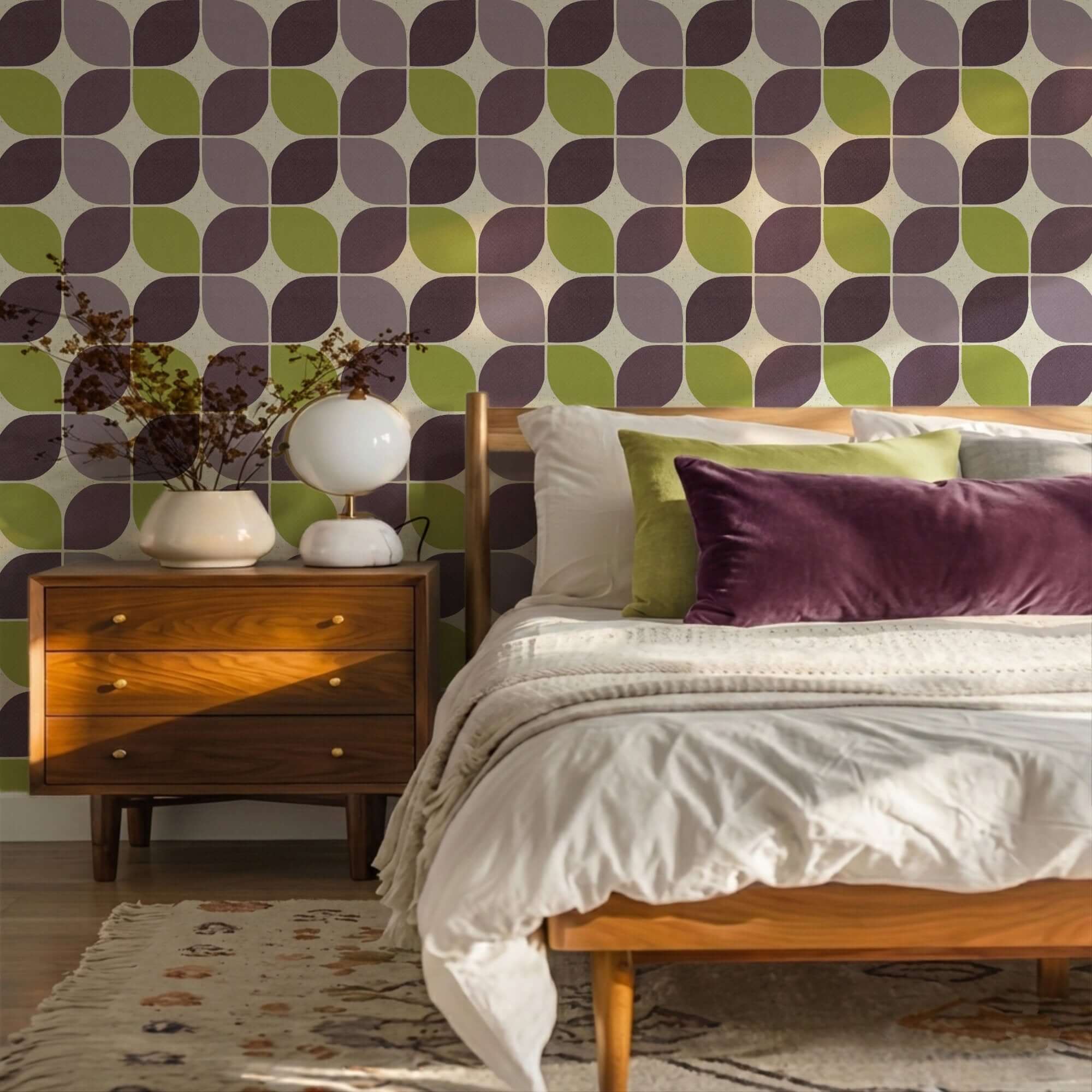
Wallpaper works best on the wall behind the bed, acting as a visual anchor. Patterns with slow repetition, gentle movement, or tonal botanicals can help the room feel held and restful, especially in low evening light.
This is also a great place for quieter colour. Warm greys, soft sage, muted sand, or stone-inspired tones tend to age well and feel soothing over time.

Japandi Wallpaper Ideas for Home Offices
Japandi home offices benefit from wallpaper that brings interest without distraction.
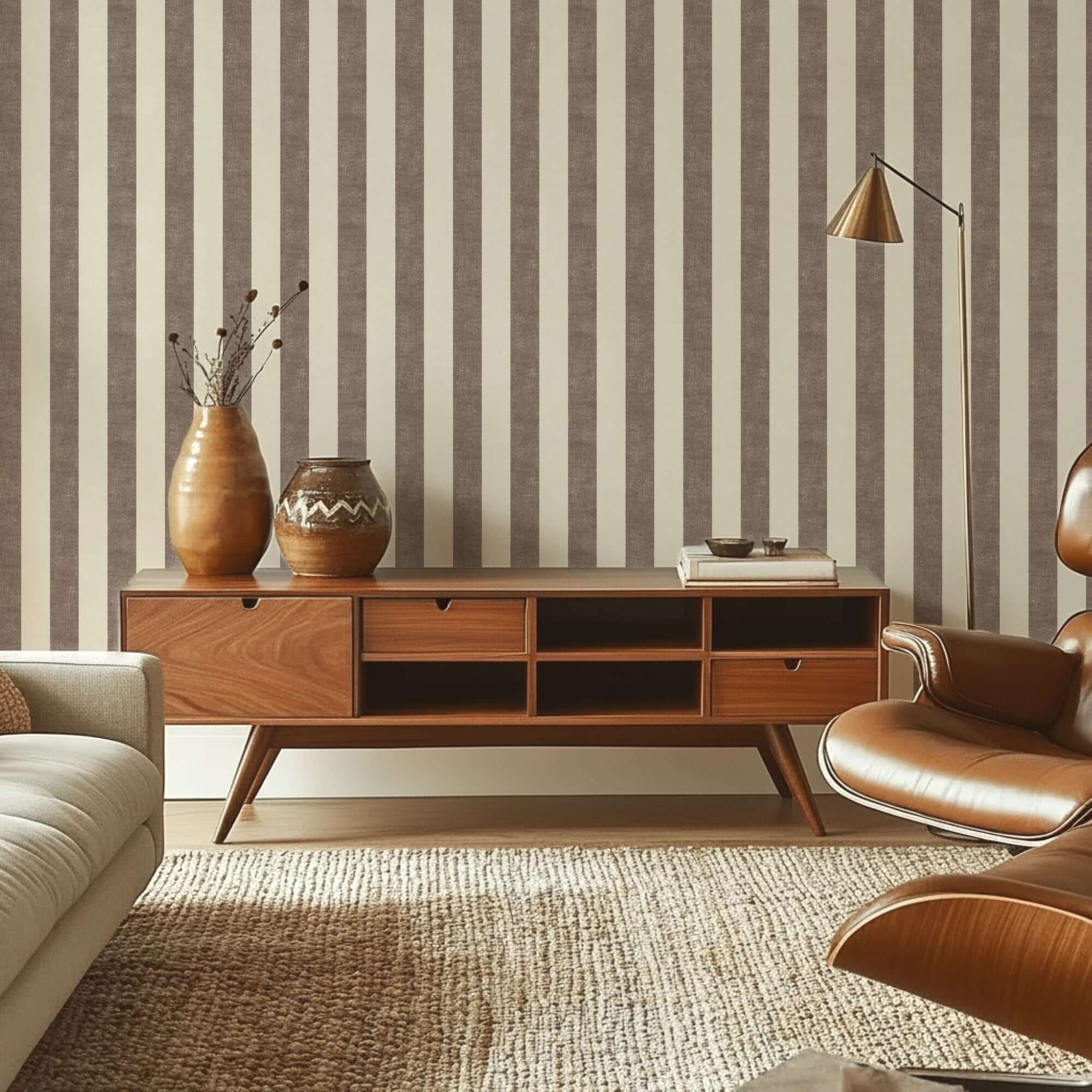
Subtle geometry, vertical rhythm, or minimal botanical patterns can help a space feel intentional while still supporting focus. This is particularly useful in small workspaces or alcoves, where wallpaper can define the area without adding clutter.
If you're working from home, the goal isn't inspiration overload, it's a space that feels steady and supportive.

Japandi Wallpaper Ideas for Dining Rooms
Dining areas often have harder surfaces, tables, chairs, flooring, which is where wallpaper can soften things beautifully.
Texture-led patterns, plaster-inspired finishes, or gentle organic repeats add warmth without making the space feel busy. Japandi dining spaces are about ritual and presence, and wallpaper can help create that sense of occasion without being formal.

Japandi Wallpaper Ideas for Hallways and Small Spaces
Japandi wallpaper works surprisingly well in hallways and smaller rooms.
Because the style leans towards calm and restraint, a soft pattern can add interest without overwhelming the space. Light neutrals, vertical movement, or subtle texture can make narrow areas feel more considered and less forgotten.
This is often a good place to be a little braver. The commitment is smaller, but the impact can be big.

Japandi Wallpaper Ideas for Bathrooms
A Japandi bathroom is all about calm, spa-like stillness, so wallpaper here should feel like a natural extension of the room, not a feature fighting for attention. Soft, textural patterns in warm sand, stone or muted sage add quiet depth behind a vanity or on a feature wall. Just choose the right type for the humidity: peel & stick or pre-pasted rather than traditional, kept away from direct splashes, so the calm isn't undone by peeling edges.

Japandi Interiors in 2026: Softer, Warmer, More Biophilic
Japandi isn't going anywhere, but it is evolving.
Looking ahead, modern Japandi interiors are becoming less about strict minimalism and more about emotional grounding. Biophilic design, bringing elements of the natural world indoors, is shifting away from literal motifs and towards texture, rhythm, and material honesty.
That means fewer obvious leaf prints and more organic movement, texture replacing colour as the main point of interest, and materials and patterns chosen for how they make a space feel, not just how they look.
Homes are increasingly being treated as places to decompress, spaces that help us slow down and actually breathe. Japandi wallpaper fits into that beautifully when it's chosen with care.
Quiet pattern, earthy palettes, and natural inspiration aren't trends in this context, they're a response to how we actually want to feel at home.

How to get Started with Japandi Wallpaper
If you're unsure where to begin, start small.
One wall. One room. One pattern that feels right rather than impressive.
Japandi interiors don't need to be perfect or purist. The best japandi wallpaper ideas aren't the boldest ones. They're the patterns that feel right rather than impressive. They need to feel lived in, thoughtful, and calm enough to support real life. Wallpaper, when chosen with that in mind, doesn't disrupt the balance, it deepens it.
If you ever want help choosing a pattern, adjusting colour, or scaling a design to suit your space, that's part of what I do. No pressure, no rush, just thoughtful choices, one wall at a time.

Written by Sara Cooper

Leave a comment
This site is protected by hCaptcha and the hCaptcha Privacy Policy and Terms of Service apply.