
Is Peel and Stick Wallpaper Good? An Honest Guide
Is peel and stick wallpaper good? The honest answer is that it can be very good indeed, but it depends on your walls, your room, and which type you're actually buying, because they're not all made the same way. You've spotted a pattern you love, but you rent, or your DIY confidence is sitting at about three out of ten. Peel and stick promises a quick refresh with no paste and no professional needed. Here's the real lowdown, minus the hype.
What is peel and stick wallpaper?
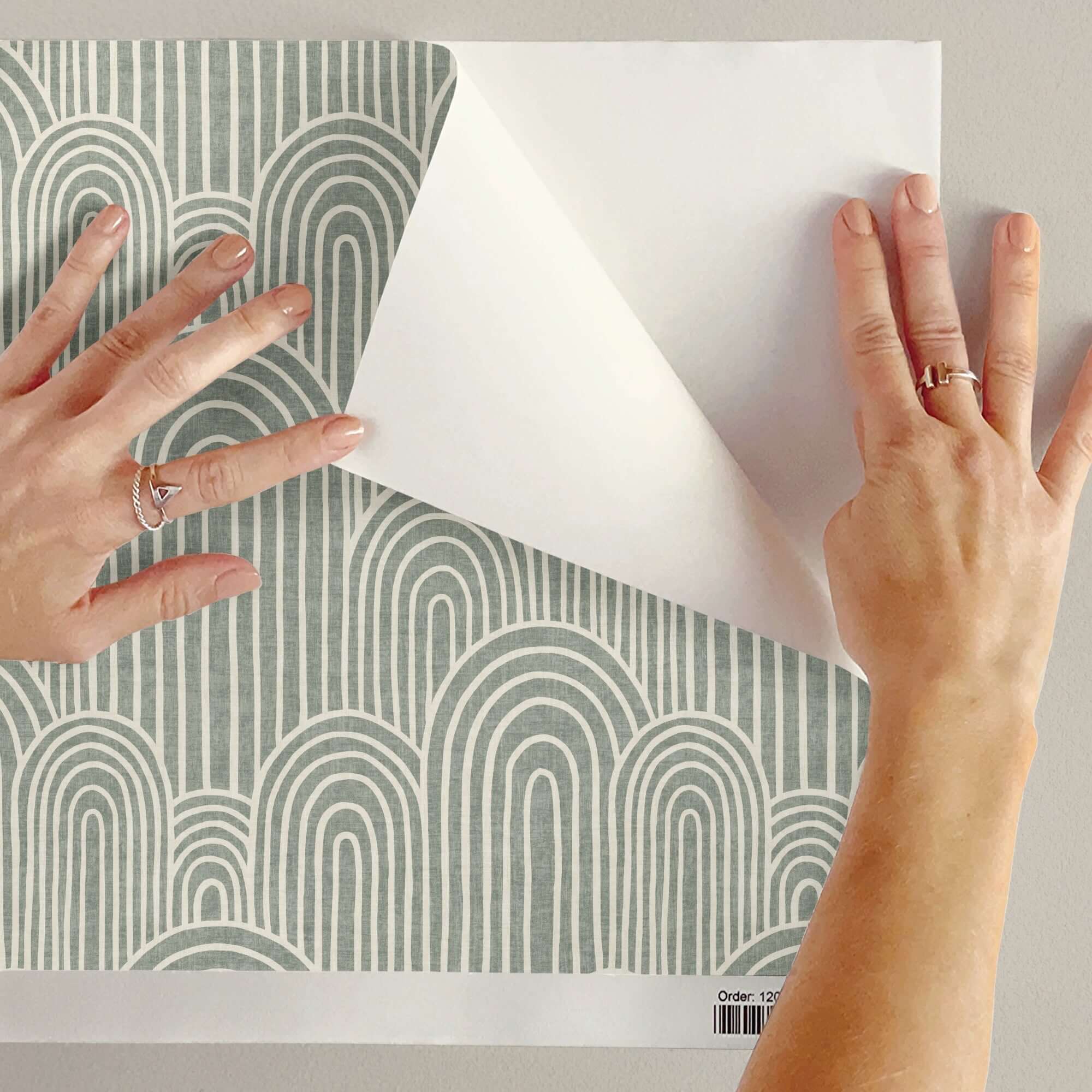
Peel and stick wallpaper has a pressure-sensitive adhesive already applied to the back. You remove the backing sheet and press the panels onto a smooth, clean wall. No paste, no water, no separate glue.

What sits under that adhesive is where quality is won or lost. A lot of peel and stick is printed on thin vinyl, which is where most of the horror stories come from: air bubbles, shrinking, lifting edges, paint damage on removal. Mine is printed on 100% polyester fabric instead, which is more substantial, doesn't shrink, and hangs edge to edge for a cleaner finish. It's also PVC-free and GreenGuard certified, worth knowing for a nursery or a room with little ventilation.
Is peel and stick wallpaper good? The honest pros and cons
Here's the straight version. Interior editors now argue it's far better than its renter-only reputation, and on a good substrate I'd agree. But it isn't right for every wall.
The pros
- No paste, no mess. Cut, peel, press. A single accent wall can go up in an afternoon with no drying time.
- Repositionable. You can lift and restick each panel for up to 24 hours, which is a genuine relief when you're lining up a pattern.
- Renter friendly. On properly prepared walls it peels away cleanly, protecting the paint underneath. No deposit drama.
- Grows with a room. Perfect for a nursery or child's room that'll change fast. A beautiful room now, no ten-year commitment.
- Versatile. Accent walls, alcoves, bookcase backs, stair risers, drawer fronts. If it's flat and smooth, it's fair game.
- Easy to clean. The fabric surface wipes down with a damp cloth. Handy with children or pets.

The cons
- It needs smooth walls. It won't grip brick, stucco or heavily textured surfaces.
- High-humidity rooms need thought. Powder rooms and well-ventilated bathrooms are generally fine, but I wouldn't put it directly behind a shower or next to a bath facing constant steam.
- It costs more per metre than traditional of similar quality, though there's more to that than meets the eye, which brings us to the next question.
Why is peel and stick wallpaper more expensive?
This one comes up a lot, and it's a fair question. On the sticker, good peel and stick often costs more per metre than traditional wallpaper. But that headline price hides two things.
First, you're paying for the material. A quality fabric peel and stick, like mine, is a world away from thin vinyl: it doesn't shrink, it hangs cleanly, and it lasts. You're buying a better product, not just a pattern.
Second, the adhesive is already built into the back, so there's no separate paste to buy. With traditional wallpaper you pay for paste on top, and most people overbuy it so they don't run out halfway through a wall, which means extra cost and a half-used tub headed for the bin. With peel and stick it's all included, and nothing goes to waste.

Third, and this is the one people forget, there's no decorator to pay. Traditional wallpaper often means hiring someone to hang it, and that labour cost quietly dwarfs the difference in the paper itself. Peel and stick is genuinely DIY-friendly, so you do it yourself in an afternoon and keep that money in your pocket. Factor the whole job in, not just the roll, and it's often the cheaper route. Add free colour customisation as standard, and the value stacks up.
Does peel and stick wallpaper damage walls?
This is the question that puts most people off, so let me be direct. The adhesive bonds to the paint layer, not the wall itself. On flat, matte or freshly painted walls that haven't fully cured, it can grip more firmly than the paint and take a flake or two on removal.
To avoid it: clean the wall first, test a small patch before committing, and if the paint feels fragile, seal it with a clear primer. When you remove it, go slowly from a corner and peel parallel to the wall rather than pulling outward. On properly painted, cured walls, it comes away cleanly.

Peel and stick vs traditional wallpaper: which is right for you?
The short version: peel and stick suits you if you're renting, redecorating often, or want something you can change without a big job. Traditional is more permanent and handles heavy wear better. If you're genuinely torn, I've written a full traditional versus peel and stick comparison that covers which rooms suit which, and what professional decorators actually prefer.

So, is peel and stick wallpaper good?
For the right room and the right person, genuinely yes. On a quality fabric substrate it goes up cleanly, comes down cleanly, and in a stable, low-humidity room it'll look good for years. It's not the answer for a steamy wet room or a heavily textured wall, but for a bedroom, a home office, an alcove or that feature wall you've been putting off, it's well worth a go. And it's brilliant for the smaller creative projects too, from drawer fronts to shelf backs.
If you'd like to browse designs, have a look through my wallpaper collections. And if you want to get the whole buying process right, from measuring up to ordering the right amount, How to measure for Wallpaper guide walks you through it. Shout if you'd like a hand choosing, no sales pitch, just honest advice.

The Practical Bits
Can I put peel and stick wallpaper in a bathroom?
In a powder room or a well-ventilated bathroom away from direct steam, it works well, and the fabric wipes clean. I wouldn't use it right behind a shower or next to a bath. If your bathroom gets very steamy, traditional wallpaper with a bathroom-appropriate paste is the safer bet.
How long does peel and stick wallpaper last?
In a stable, low-humidity room, a good fabric peel and stick can last several years, and fabric outlasts thin vinyl because it doesn't shrink at the seams. If you want a decade with no maintenance, traditional is more reliable. For rentals or rooms you like to refresh, peel and stick makes a lot of sense.
Does peel and stick wallpaper work on textured walls?
Only lightly textured ones. It needs a smooth, clean surface to grip properly, so brick, heavy texture or flaky paint won't work without prep. Test a patch first if you're unsure.
Will peel and stick wallpaper damage my walls if I rent?
Not if your walls are properly painted and you remove it correctly. Test a small patch first, and when it's time to take it down, peel slowly from a corner, parallel to the wall. Most landlords are fine with it when it's put up and taken down properly.

Written by Sara Cooper


Leave a comment
This site is protected by hCaptcha and the hCaptcha Privacy Policy and Terms of Service apply.