
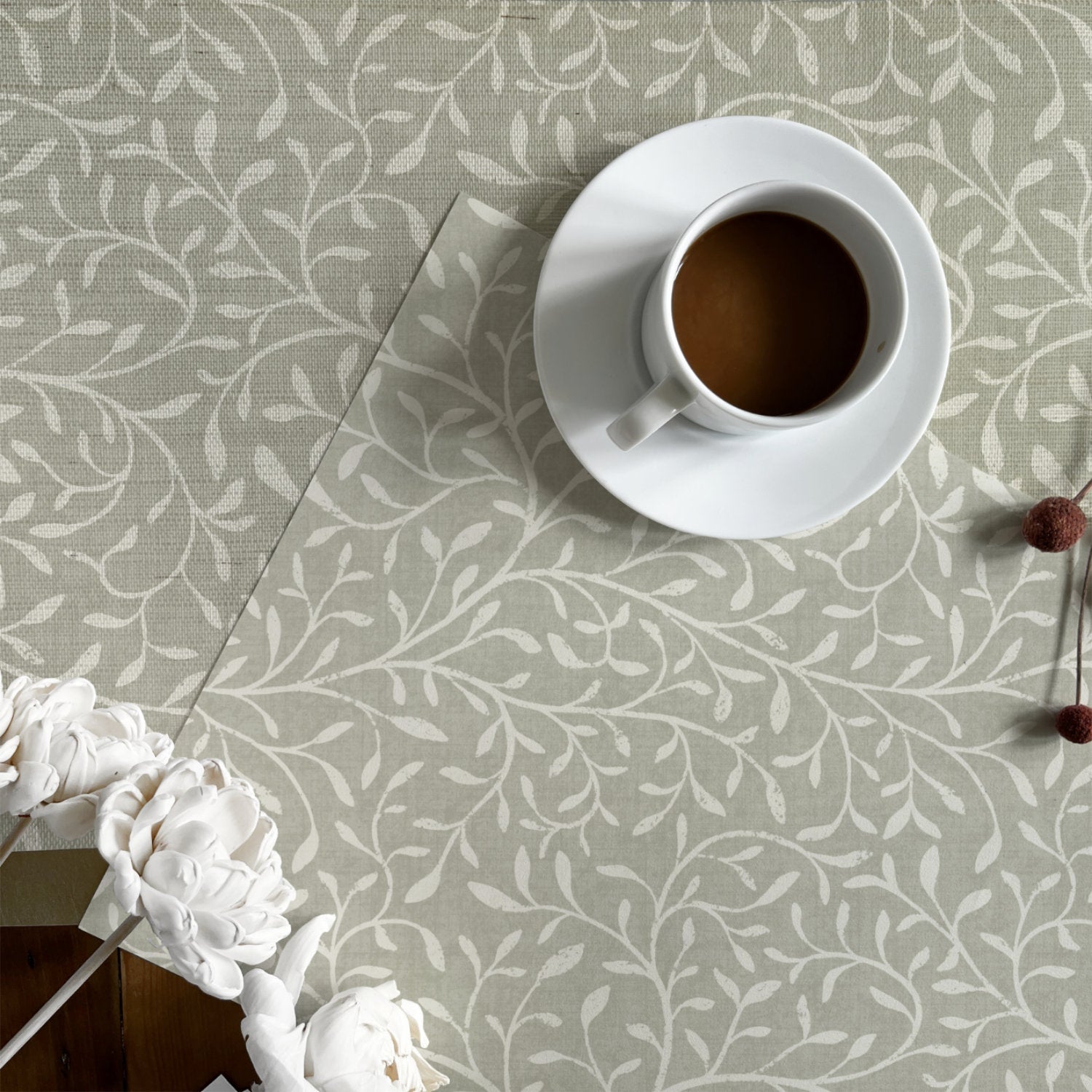
Grasscloth Wallpaper: A Natural, Textured Upgrade for Your Walls
I'll be honest, when I first came across grasscloth wallpaper, I wasn't entirely sure what to make of it. Another fancy wallpaper type on an already overwhelming list? But the more I looked into it, the more I got it. There's something about the texture, the way it catches the light, that makes a wall feel completely different. Not just covered, but considered.
So this is an honest guide to grasscloth: what it is, what it's made of, whether it's still in style, and the real limitations worth knowing before you fall for it. I'll say up front that I don't sell the genuine woven article, but if you love the look, I do make a faux grasscloth version, and I'll come to that later.

What is grasscloth wallpaper?
Grasscloth is a natural wallcovering made from plant fibres that are handwoven onto a paper backing. Think of it as wallpaper meets natural texture. Because it's crafted by hand, every roll has subtle variations in colour and weave, so no two walls will ever look exactly the same. The seams stay visible once it's up, and the colour can shift slightly across a wall. That might sound like a flaw, but it's the whole charm. Those natural inconsistencies give it a warmth and character that printed wallpaper simply can't fake.
The fibres have a soft lustre that changes with the light through the day. It's not shiny or showy, just quietly beautiful, and it grounds a room in a way that feels calm and real.
What is grasscloth wallpaper made of?
Here's something a lot of people don't realise: grasscloth isn't one single material, it's a whole family of natural fibres. Sisal is the most common, but grasscloth is also woven from jute, seagrass, hemp, arrowroot and bamboo, among others. Each fibre gives a slightly different weave, sheen and colour, from fine and even to chunky and rustic. What they share is that they're natural, handwoven, and backed onto paper for hanging.
Because it's a natural material with real texture, it behaves differently from a printed paper, which is exactly where its limitations come in.

Is grasscloth wallpaper still in style?
Very much so. Grasscloth has quietly stayed in style for decades, precisely because it doesn't chase trends. Its natural texture suits everything from modern Japandi interiors to heritage and art deco rooms, and designers reach for it again and again for the warmth and depth it brings. If you'd like a second opinion, interior designers explain why they love grasscloth in a way that echoes exactly what I've found: it does a job paint simply can't.
Why choose grasscloth?
Depth and texture, mainly. When someone walks into a room with grasscloth, they notice, not because it's loud, but because the walls feel alive and tactile. It has enough presence to carry a feature wall on its own, without needing a busy pattern or bold colour. And like any natural material, it brings a sense of ease, a bit of the outdoors brought in, grounding a space with quiet, intentional style.

The honest limitations of grasscloth
This is the part I'd want a friend to tell me, so here it is straight.
It isn't suitable for bathrooms or any high-moisture room. The natural fibres don't cope with humidity, and there's no peel & stick version to get around it, real grasscloth has to be hung the traditional way with paste, so it isn't a weekend DIY job either. I'd strongly recommend professional installation unless you're already confident with traditional wallpaper. It's also on the expensive side, because it's largely handmade. You're paying for genuine craft.
And a personal aside: if you have cats, take note. When I was growing up, our living room was covered in hessian wallpaper, and our three cats treated it like their personal climbing frame. The texture that humans love, cats often love even more.
None of this is meant to put you off. If you want the real thing and the room suits it, grasscloth is genuinely special. But if those limitations are a dealbreaker, there's another way to get the look.

Love the look but not the limitations? Try faux grasscloth
This is where faux grasscloth comes in. My Faux Grasscloth Wallpaper is a printed design that captures the woven, textural look of the real thing without the drawbacks. Because it's printed on my usual materials, you can have it as peel & stick or pre-pasted, hang it yourself, use it in a wider range of rooms, and it costs a good deal less than handwoven grasscloth. I can even recolour it to suit your space.
It won't give you the literal three-dimensional fibre texture, I'd never pretend otherwise, but for that calm, woven, grounded feel, it's a lovely and far more practical alternative. You'll find it alongside my other tactile designs in the Texture Wallpaper collection.
How to clean grasscloth wallpaper
Real grasscloth is made from natural fibres, so it needs gentle care. Dust it with a soft, dry cloth or use a vacuum with a brush attachment. Avoid water and harsh cleaning products, since natural fibres can stain or warp. For any marks, blot rather than rub with a dry sponge. The aim is to keep the texture fresh without introducing moisture. Faux grasscloth is far more forgiving here, another point in its favour for busy rooms.

(Image credit: I Want Wallpaper)
Worth a try?
If you're drawn to natural materials and want real texture on a wall, genuine grasscloth is hard to beat, as long as the room suits it and you're happy with the care and the cost. If it were me, I'd start with a swatch, hold it against your wall at different times of day, and see how the light plays across it. You'll know quickly if it's speaking to you.
And if the look appeals but the limitations don't, my faux version gives you most of the magic with none of the faff. Either way, shout if you'd like to talk through what would work best for your space. No sales pitch, just honest advice if you want it.

Written by Sara Cooper

Leave a comment
This site is protected by hCaptcha and the hCaptcha Privacy Policy and Terms of Service apply.